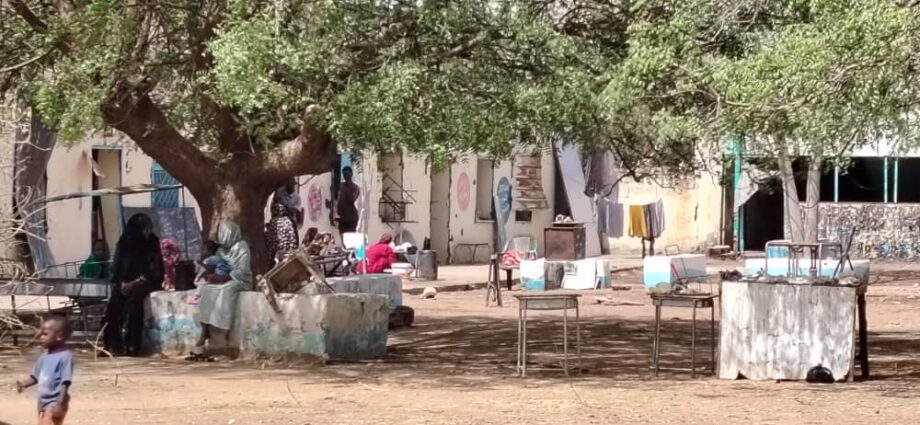
Nyala, April 10(Darfur 24)
Displaced persons fleeing from Khartoum and Al-Jazeera to Nyala, the capital of South Darfur State, are facing harsh humanitarian conditions and difficulties in providing food and water, amid a lack of humanitarian aid.
Hussein Al-Nadeef, a displaced person from the Mahira School shelter center, told Darfur 24 that he arrived in Nyala on March 20 with more than 70 families.
He added that immediately after their arrival in Nyala, they approached the Sudanese Agency for Relief and Humanitarian Operations and some organizations in the state in search of aid for their families, but to no avail.” He noted that the head of the state’s civil administration and the secretary of the state’s Zakat Office donated some food supplies for Eid al-Fitr.
For her part, displaced person Ishraqa Adam Sharaf al-Din told Darfur 24 that she and her children left Khartoum in April of last year for Tambool in Al-Jazeera State, which was later attacked by the Rapid Support Forces( RSF). She added that she considered returning to her hometown of Nyala after being stranded. She noted that she endured great suffering during her 33-day journey to Nyala, during which her grandmother died and her property was looted.
Ishraqa indicated that she lives in the Mahira School shelter in Nyala, which lacks basic necessities such as water, sanitation, and other services.
She said that some children suffering from watery diarrhea and malnutrition are sleeping on the floor, despite promises from the relevant authorities in the state to provide aid, which has not yet arrived.
According to the management of the Mahira School shelter, 1,700 displaced families from Khartoum and Al-Jazeera states have been identified, and more than 70 families are currently residing in the center.
More than 4,000 displaced families have arrived in South Darfur state over the past three months, according to a source with the Sudanese Agency for Relief and Humanitarian Operations (SARHO)who spoke to Darfur 24. He noted that most families have left for localities, while others have stayed with their relatives.