Khartoum/London, January 08 (Darfur24)
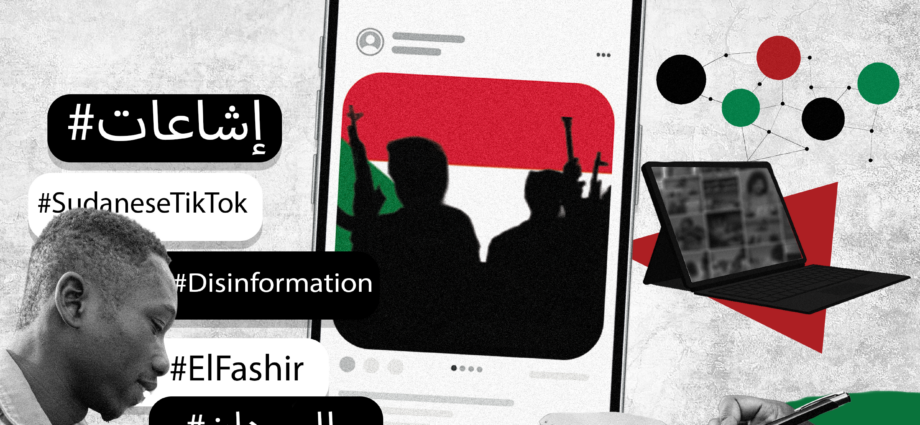
A new international assessment has warned that disinformation and information manipulation have become central tools in Sudan’s ongoing conflict, operating as direct precursors to violence, undermining humanitarian efforts, and accelerating the fragmentation of society.
The report, titled “Information Manipulation in Sudan: A Baseline Assessment of Actors, Narratives and Tactics,” was conducted by the Thomson Foundation as part of the UK Foreign, Commonwealth and Development Office (FCDO)-funded Sudan Digital Resilience Project.
According to the assessment, since the outbreak of war in April 2023, Sudan’s information ecosystem has collapsed alongside its physical infrastructure, creating an environment where sophisticated digital and hybrid warfare tactics are being tested with consequences extending beyond Sudan’s borders.
The study found that both parties to the conflict—the Rapid Support Forces (RSF) and the Sudanese Armed Forces (SAF)—have developed coordinated disinformation networks, employing distinct but equally dangerous strategies.
The RSF was described as operating a technically advanced disinformation apparatus, relying on high-quality multimedia content, AI-enhanced imagery, professional public relations support, and foreign backing that predates the conflict. RSF-aligned campaigns reportedly use influencers and anonymous amplification accounts to spread content optimised for engagement on platforms such as TikTok, Facebook, X, and YouTube. Their messaging focuses on narratives of marginalisation, anti-elite rhetoric, and psychological intimidation, including explicit threats of gender-based violence.
By contrast, the SAF compensates for lower technical sophistication through the sheer volume of content, institutional legitimacy, mobilisation of the diaspora, and emotionally charged messaging. SAF-aligned narratives emphasise nationalism, religious legitimacy, and denial of responsibility for civilian harm, while amplifying reports of RSF atrocities.
The report also identified extensive coordinated inauthentic behaviour networks supporting both sides, with influencers commanding large followings and involvement from geopolitical actors including the United Arab Emirates, Egypt, Russia, and Israel.
Between 1 September and 31 October 2025, researchers recorded 6,348 posts classified as information manipulation, reaching nearly 891 million users and generating more than 45,000 engagements. Facebook was identified as the primary amplification platform, while X played a major role in shaping political discourse through coordinated hashtag campaigns. TikTok emerged as a critical space for video-based disinformation, particularly among younger audiences, while YouTube functioned as a repository for long-form content later repurposed into misleading short clips.
Encrypted platforms such as WhatsApp and Telegram were found to enable rapid circulation of unverified and inflammatory content beyond public scrutiny. Researchers documented widespread use of AI-generated material, recycled footage from other conflicts, graphic real-time imagery, and “narrative laundering,” whereby false content is transferred across platforms to create an illusion of credibility.
Foreign interference was identified as a defining feature of Sudan’s information war. The report strongly implicated the UAE in supporting RSF-aligned disinformation through bot networks, professional communications infrastructure, and amplification by Emirati-based platforms and influencers. Russia was linked to influence operations through Wagner Group connections and commercial interests in Sudan’s gold sector. Egyptian and Yemeni influencers were found to amplify SAF-aligned narratives, while Israeli-linked channels participated in coordinated campaigns alongside Emirati accounts.
The assessment warned that disinformation is directly undermining humanitarian operations. Aid workers and Emergency Response Rooms are frequently accused of espionage or collaboration, leading to arrests, attacks, and operational paralysis. Journalists are systematically targeted by both sides, facing harassment, detention, and killings, as Sudan’s media sector collapses under pressure.
The report also documented a consistent pattern linking online hate campaigns to mass atrocities. In Al-Halfaya, a week-long hate speech campaign preceded RSF operations and the public execution of more than 45 civilians. In El Geneina, disinformation targeting the Masalit community preceded massacres that left over 2,000 people dead. Similar rhetoric labelling civilians as “collaborators” was recorded ahead of violations in Al-Jazira State.
Researchers concluded that information manipulation in Sudan now functions as a weapon of war, deliberately deployed to justify violence, silence peace advocacy, and destroy social cohesion.
The report called on journalists, technology companies, governments, and humanitarian organisations to take urgent action, including strengthening verification and safety protocols, designating Sudan as a crisis zone requiring enhanced content moderation, integrating information protection into humanitarian response frameworks, and providing sustained support for independent Sudanese media.